
Loading…
FluxForce Institute for
Responsible Engineering
Igniting core…
000%
FIRE trains engineers and teams to build AI systems and prove they are safe to run.
Programs designed for engineers, by engineers — to build trustworthy, scalable and responsible AI systems.
Every program ends in a working system, not a slideshow.
You write the evaluation harness that catches its failures.
On your own GitHub, not a completion certificate.
Python: functions, classes, virtual environments, async — and calling a REST API, reading its docs.
A progressive path from foundations to advanced AI engineering.
Python, machine learning, and the engineering practice AI work assumes. Ten to twelve weeks — where most engineers switching into AI start.
Four tracks, foundations to sovereign AI. Every program ends in an artifact you own, built and reviewed, not just watched.
Every program, shortest path to longest depth.
A 12-week program for engineers who already write Python and want to build AI agents that survive production. You'll build a multi-agent system, an…
You will build
A multi-agent research assistant that plans, calls tools, and cites its sources
Six weeks for engineering teams, delivered against your own systems and constraints. Same agentic engineering as the open cohort, taught on your…
You will build
A working agent built against one of your real workflows
Eight weeks building one substantial system against a real brief, with weekly review and a final defence to a technical panel. The artifact most…
You will build
A substantial deployed system, documented and defensible
A half-day briefing for boards and leadership teams: where AI exposure sits, what you are accountable for, what evidence to demand before approving a…
You will build
A written exposure summary for your organisation
Three weeks attacking AI systems — your own first. Prompt injection direct and indirect, tool abuse, scope escalation, data exfiltration, and the…
You will build
A documented red-team report against your own agent
Six weeks on operating AI systems after launch: tracing, cost control, model routing, incident response, and the deployment patterns that make…
You will build
A deployed system with distributed tracing and cost dashboards
Two-week electives applying the core curriculum to one domain — financial services, healthcare, public sector or energy. Same engineering, different…
You will build
A domain-specific system built against realistic constraints
A two-day or five-day intensive delivered on campus. Students leave having built and deployed a working AI system, not having watched one being built.
You will build
A deployed AI application built during the workshop
Four weeks on the engineering practice AI work assumes but rarely teaches: version control that survives collaboration, APIs that fail well…
You will build
A containerised service with CI running tests on every push
Tell us your background and what you are trying to build. We will point you to the right track, or tell you honestly if none of them fits yet.
Every track ends with an artifact that runs. A few of them are here — apps, admin panels and back ends built and defended by people in the program.


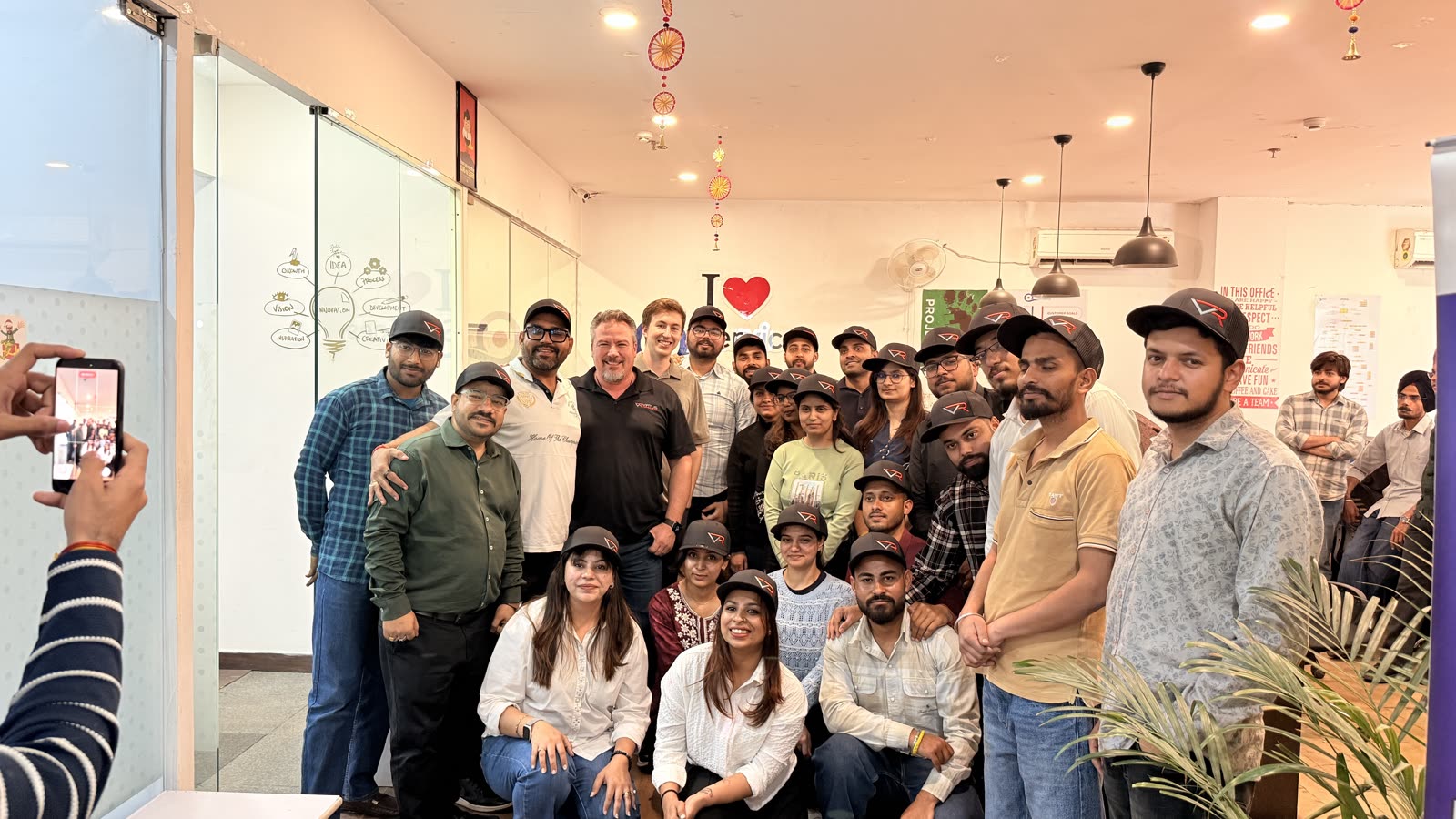
We meet clients, visit colleges and bring the two together. Sessions, reviews and conversations that shape how the program is taught.
You earn a certificate by shipping the artifacts a program requires and defending them to a technical panel — no attendance certificate, no multiple-choice exam.